Look at the room before choosing the roof
A transparent roof lets daylight through, but it does not mean the indoor light will be unchanged. Frames, panels and the new covered area all become part of the path between the sky and your windows.
First identify the room that matters most. Is it already dim during the day? Does it have other windows? Is the patio outside its main source of light? A bright outdoor entertaining area and a bright living room are related goals, but they are not the same assessment.
Four site conditions to show us
- Existing eaves: include the shaded area already sitting above the doors.
- Roof projection: show how far the proposed cover extends from the house, not just its width.
- Surrounding obstructions: trees, fences and neighbouring buildings affect the available sky view.
- Sun direction and time: explain when you notice glare, strong sun or a dim room.
Take one photograph from inside the room looking out and another from the patio looking back at the doors. Keep the same camera settings when comparing the same view at different times, where practical. Phone auto-exposure can make a dim room look much brighter, so add a short description of what you actually experience.
Clear or tinted: choose around the space
Clear panels prioritise visible light. Tinted panels reduce visible light and may suit zones where direct sun is a concern. The choice should consider the adjoining room as well as how you use the patio.
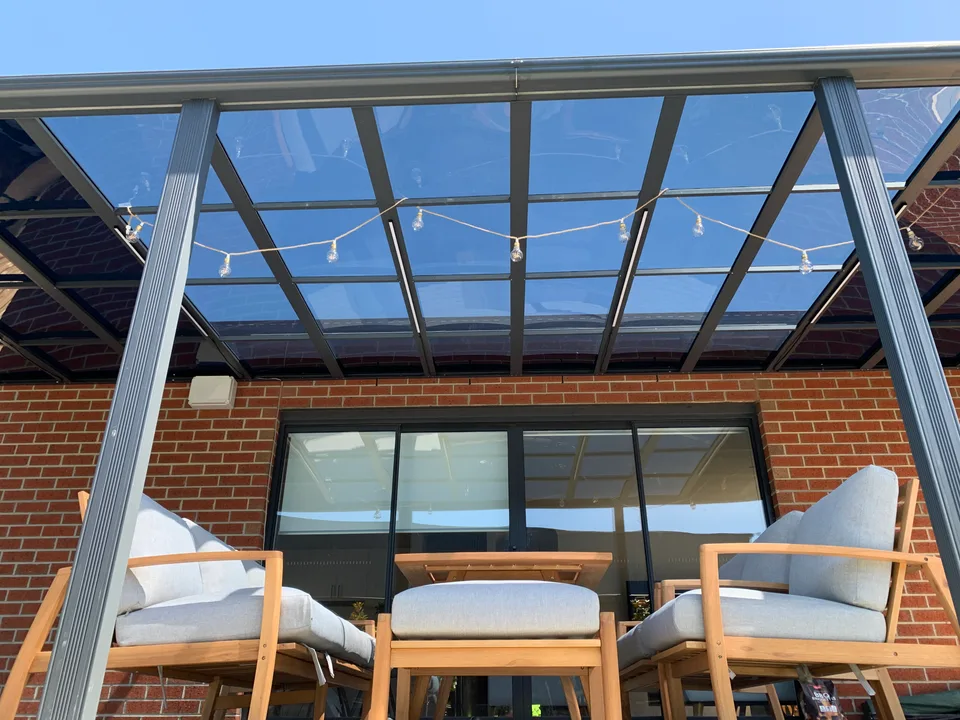
At the Keysborough installation, two panel tint levels were positioned around different daylight and solar-exposure needs. That is a useful example of considering zones individually; it is not a prescription for every home.
Read the clear versus tinted guide before discussing samples. Use the samples to compare tint and appearance against your windows and the surrounding finishes.
Daylight and summer comfort need separate questions
Visible light, UV protection and heat are different properties. UV protection should not be treated as a promise that the space will stay cool. Air movement, surrounding shade, orientation and the overall enclosure also affect how the patio feels.
Tell us whether your priority is a dark room, afternoon glare or an uncomfortably warm outdoor area. That distinction makes the comfort and weather discussion more useful.
What a photograph can—and cannot—tell you
Use project photos to compare roof depth, framing and the relationship to windows. This is not a before-and-after light measurement: weather, exposure and time of day affect how bright a scene appears.
An AI photo preview can help you picture a layout, but it is not a daylight simulation. Discuss the light your room needs during the site review.
Bring a clear brief to the site discussion
Describe the room you want to keep bright, the time of day that matters and any existing discomfort. Ask how the proposed projection, panel layout and connection height address those priorities. If daylight performance is critical to your decision, discuss whether a specialist assessment is needed before committing.
Start with the photo preparation guide and include an indoor-to-outdoor view with your enquiry.